
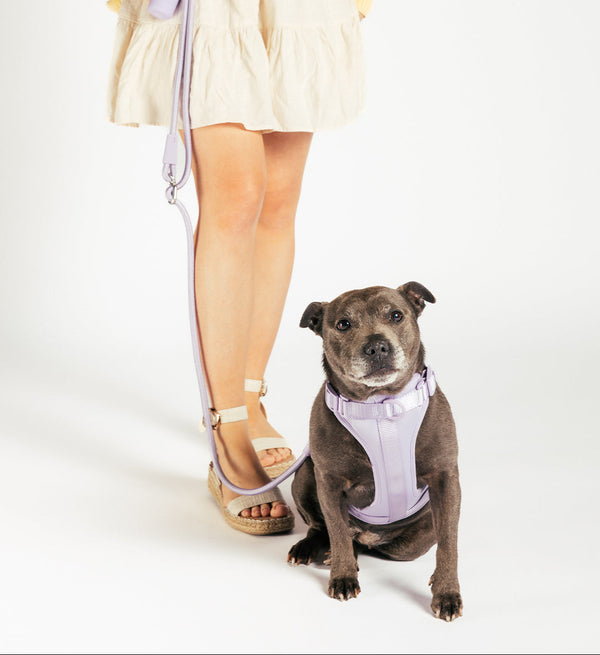

A well-adjustable handsfree dog leash is often practical for quiet running together. With canicross, where your dog actively pulls in front of you, you need special equipment with a pulling harness, hip belt and elastic line. So first choose which form of running you mean. A regular crossbody leash is not automatically a canicross leash.
Quiet running or canicross
Jogging together usually means that your dog walks next to you with a loose or slightly tensioned leash. Canicross is a dog sport where your dog walks in front of you and actively pulls you forward. That difference determines which material is safe and pleasant.
| Use | Running at a leisurely pace | Canicross |
|---|---|---|
| Dog position | Next to or diagonally in front of you | For you |
| Voltage on the line | As little as possible | Conscious pulling power |
| Belt | handsfree and adjustable | Elastic canicross leash |
| Confirmation with you | Middle or crossbody | Wide hip belt |
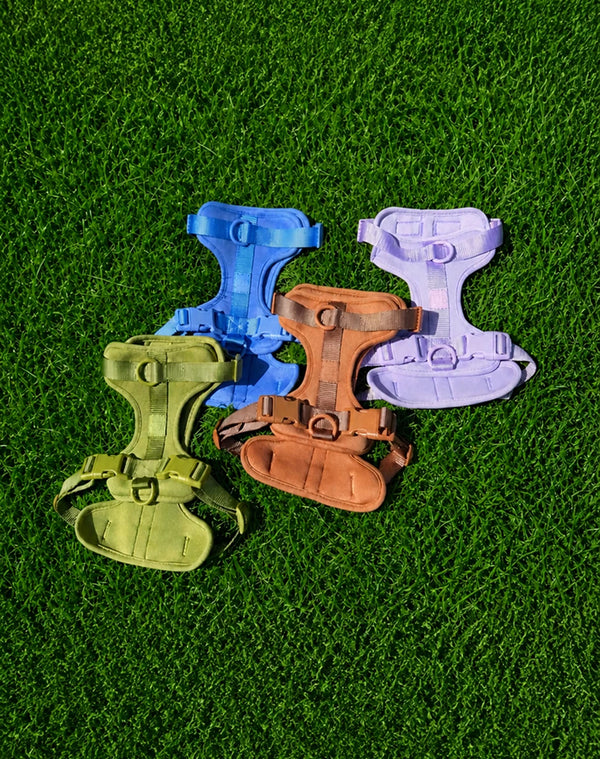
| Dog harness | Well fitting hiking harness | Special pulling harness |
If you especially want your hands free during a relaxing walk, take a look at the handsfree dog leashes. For real canicross you need specialized equipment designed for constant pulling force.
Why an elastic leash is important for canicross
During canicross, the distance between you and your dog is constantly changing. An elastic part absorbs sudden shocks. That is more pleasant for your body and for your dog.
A normal walking leash may be suitable for gentle jogging, but not for continuous pulling at a pace. Before every training session, check the closures, leash and harness for wear.
How to start running with your dog
- Have your dog's health assessed if you have any doubts about condition, joints or breathing.
- Start by walking and trotting slowly for short distances.
- Choose a soft surface and avoid heat.
- Build up distance and pace slowly.
- Give your dog time to sniff, drink and recover.
- Stop when his pace changes, he lags behind or clearly doesn't want to anymore.
A dog doesn't have to like your training schedule. Keep the walk together short if you want to continue walking afterwards.
Pay attention to age, build and temperature
Intensive running is not suitable for every dog. A young, growing dog needs time before long-term exercise is sensible. Dogs with a short snout, health problems or little condition also require extra caution.
Train early on hot days or skip the round. Asphalt can be hot and dogs lose heat differently than humans. If in doubt, discuss running with your vet.
For daily use, also read which length dog leash suits your walk.
What you should not do
Do not attach a leash to a regular collar while running. A sudden stop can put a lot of pressure on the neck. Do not use a long loose line that can get around your legs.
Do not immediately start with five kilometers because you can easily run that distance. Your dog's fitness must be built up separately. And don't call a handsfree walking leash a canicross leash if it is not designed for that sport.
Frequently asked questions
Can I run with a regular dog leash?
That is possible for a very quiet stretch, but a handsfree model often gives more freedom of movement. For canicross you choose an elastic line and specialized material.
From what age can a dog run?
That depends on breed, build, growth and type of load. For intensive training, ask your vet for advice and wait until your dog is physically sufficiently developed.
Is a hip belt the same as a canicross belt?
No. A canicross belt is made to distribute traction force low and wide across your body. A simple hip belt for walking does not necessarily have to be suitable for this.
How long can a dog walk next to a bicycle or runner?
There is no fixed time for every dog. Start short, build up gradually and pay attention to breathing, posture, pace and recovery.
Can every dog do canicross?
Not every dog is suitable for it. Health, age, conformation and enjoyment of pulling are important, and when in doubt, a vet is the right starting point.