

This article is general information, not medical advice. If your dog has IVDD or another back condition, always consult with your veterinarian before adjusting equipment or walking routine.
What is IVDD in brief
IVDD (intervertebral disc disease) is a condition in which one or more intervertebral discs in your dog's back become damaged or bulge, which can put pressure on the spinal cord. It is more common in breeds with long bodies or short legs, such as the Dachshund, and in some brachycephalic breeds such as the French Bulldog. A veterinarian makes the diagnosis and determines the treatment, this article does not discuss medical treatment further.
Why the choice of dog harness is discussed
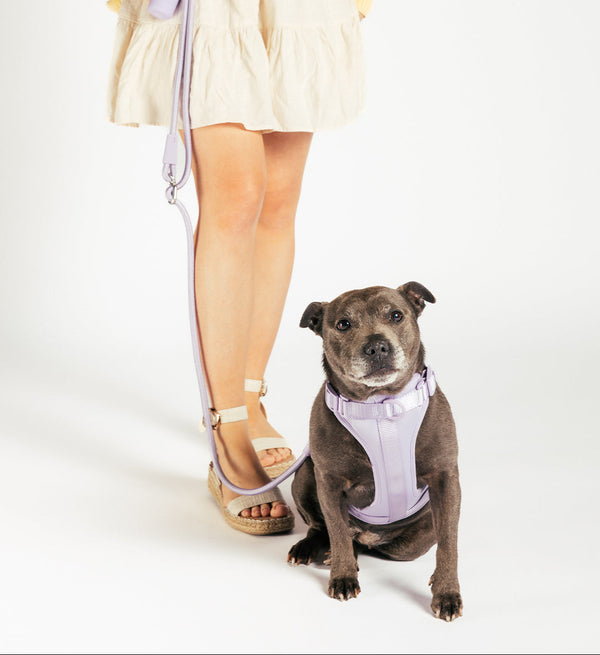
For a dog with back problems, everything that can put pressure or shock on the back and neck during a walk is often looked at. A collar concentrates pulling force on the neck, which is often discouraged by veterinarians for dogs with back or neck sensitivity. A harness distributes that force over a larger surface area, which is more pleasant for some dogs, but this does not replace medical advice.
What vets often point out for dogs with back problems
- Avoid jumping on and off furniture or from the car
- Limit stairs where possible
- Walk calmly on the leash, avoiding jerks or sudden movements
- Consider a harness instead of a collar, in consultation with your veterinarian
What to look for in a harness
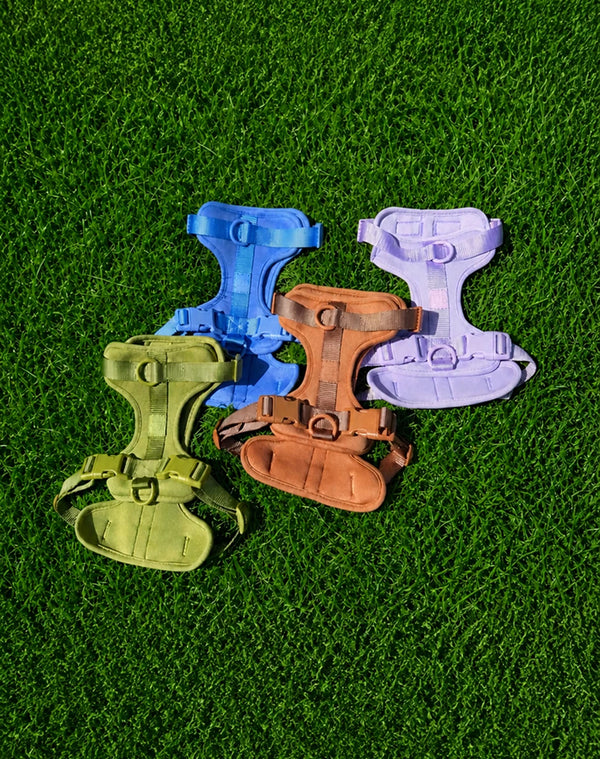
Choose a harness that does not restrict shoulder movement, is adjustable at several points, and does not pinch around the chest. A front clip can help to reduce pulling without extra force on the back, but if in doubt, always consult with your vet about which fit is best for your dog's specific situation.
What not to do
- Do not change the equipment or training schedule of a dog with a diagnosed back condition without consulting the veterinarian.
- Do not assume that a harness is a treatment, it is support equipment, not a therapy.
- Do not ignore signs such as sudden lameness, pain when touching the back, or reluctance to move. Contact your vet immediately.
Frequently asked questions
Is a harness a treatment for IVDD?
No, a harness is supporting equipment for the walk, not a treatment. Always follow the advice and treatment plan of your veterinarian.
Which breeds are more likely to suffer from IVDD?
Breeds with a long body and short legs, such as the Dachshund, and some brachycephalic breeds such as the French Bulldog, are more common in the statistics. Any dog can get it.
Can a dog with IVDD still walk?
That depends entirely on the diagnosis and the advice of your vet. Always follow their guidelines regarding duration, intensity and type of exercise.
Is a collar always prohibited for back problems?
That differs per dog and per the vet's advice. In general, a harness is more often recommended because it distributes pressure differently than a collar.
Where can I recognize signs of back problems in my dog?
Look for sudden lameness, a hunched back, reluctance to jump or climb stairs, or pain when touched. If in doubt, always contact your vet.
Also read our explanation about whether a harness is bad for your dog's neck for more background on pressure distribution. View our dog harnesses, or read our guide to harnesses for brachycephalic breeds.
